Thinking…..
What is a dietitian?
One of the things the Angry Chef (https://angry-chef.com) and I discussed last week was how to get people to understand what is a dietitian. So here are a few facts:
According to the UK British Dietetic Association,
‘Registered Dietitians (RDs) are the only qualified health professionals that assess, diagnose and treat dietary and nutritional problems at an individual and wider public health level. They work with both healthy and sick people. Uniquely, dietitians use the most up-to-date public health and scientific research on food, health and disease which they translate into practical guidance to enable people to make appropriate lifestyle and food choices.’
See this link here for more information about what dietitians do: https://www.bda.uk.com/improvinghealth/yourhealth/dietitian
So what is the difference between a nutritionist and a dietitian?
Here it starts to get confusing; the title of ‘dietitian’ is protected by law in the UK by the Health and Care Professions Council, similar to physiotherapists etc. Anyone who calls themselves a dietitian without being registered can be prosecuted (https://www.hcpc-uk.org/concerns/what-we-investigate/misuse-of-title/). To be a Registered Dietitian, you have to pass a recognised Dietetics course at a university, either at undergraduate (3-4 years full-time) or post-graduate (2 years full-time) level;(https://www.bda.uk.com/training/career/qualifyinghttps://www.bda.uk.com/training/career/qualifying). After qualifying at University, dietitians are registered by the HCPC, so that anyone can check that their dietitian is on the register (https://www.hcpc-uk.org/check-the-register/).
In contrast, anyone can call themselves a ‘nutritionist’, ‘diet therapist’ or ‘nutritional therapist’ and these titles are not protected by law. Although some nutritionists are registered with a different association called the Association for Nutrition, (http://www.associationfornutrition.org/).
More from the BDA; ‘anyone can call themselves a nutritionist, however only registrants with the UK Voluntary Register of Nutritionists (UKVRN) can call themselves a Registered Nutritionist (RNutrs). RNutrs are not permitted by law to call themselves dietitians.’ Here is a link to the difference; https://www.bda.uk.com/improvinghealth/yourhealth/dietitian_nutritionist
So a member of the public can check the appropriate register for both Registered Dietitians and Registered Nutritionists. Although this sounds confusing (even to me as I am typing), the underlying principle of all this regulation and registration is to ensure that standards of practice are achieved and maintained and that the public is protected. Hope this helps.
Festival dietitian
Why am I writing this?
- Because I am a dietitian
- Because I’ve just come back from the amazing Port Eliot Festival. There I met the angry chef (https://angry-chef.com/blog). I wish the angry chef was a dietitian, because he’s great at debunking the fad diets. And he is very complimentary about dietitians.
- Because I only told 4 people I met at the Festival that I was a dietitian and was asked my opinion on: The keto diet, the Paleo diet, the someone-put-something-on-my-friends-tongue-to analyse his-diet diet and the Ayurvedic diet. I know this is a very small, non-randomised sample, but is everyone following some sort of fad diet? If so, this is very worrying.
- Because it seems that people have a great interest in food and nutrition but are being ‘fed’ garbage by people selling fad diets. So here is a link to the British Dietetic Association Food Facts about fad diets; https://www.bda.uk.com/foodfacts/faddiets.pdf and here is one about detox diets for good measure; https://www.bda.uk.com/foodfacts/detoxdiets.pdf
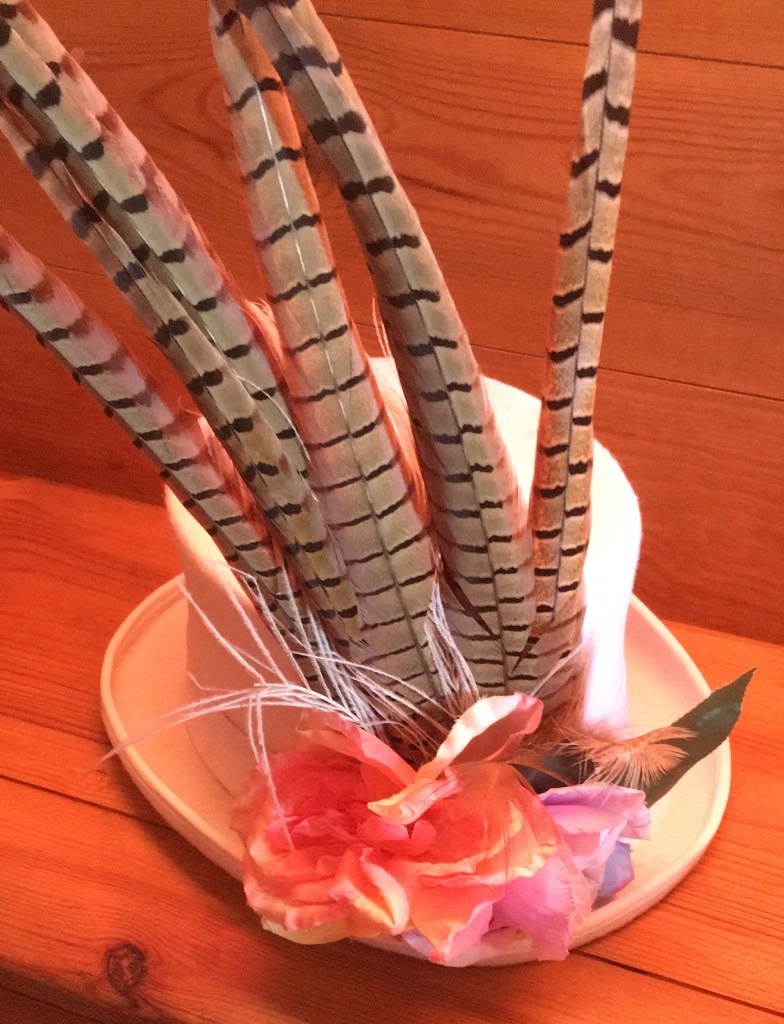
- Because I want to share a photo of my festival hat:
Introduce Yourself (Example Post)
This is an example post, originally published as part of Blogging University. Enroll in one of our ten programs, and start your blog right.
You’re going to publish a post today. Don’t worry about how your blog looks. Don’t worry if you haven’t given it a name yet, or you’re feeling overwhelmed. Just click the “New Post” button, and tell us why you’re here.
Why do this?
- Because it gives new readers context. What are you about? Why should they read your blog?
- Because it will help you focus you own ideas about your blog and what you’d like to do with it.
The post can be short or long, a personal intro to your life or a bloggy mission statement, a manifesto for the future or a simple outline of your the types of things you hope to publish.
To help you get started, here are a few questions:
- Why are you blogging publicly, rather than keeping a personal journal?
- What topics do you think you’ll write about?
- Who would you love to connect with via your blog?
- If you blog successfully throughout the next year, what would you hope to have accomplished?
You’re not locked into any of this; one of the wonderful things about blogs is how they constantly evolve as we learn, grow, and interact with one another — but it’s good to know where and why you started, and articulating your goals may just give you a few other post ideas.
Can’t think how to get started? Just write the first thing that pops into your head. Anne Lamott, author of a book on writing we love, says that you need to give yourself permission to write a “crappy first draft”. Anne makes a great point — just start writing, and worry about editing it later.
When you’re ready to publish, give your post three to five tags that describe your blog’s focus — writing, photography, fiction, parenting, food, cars, movies, sports, whatever. These tags will help others who care about your topics find you in the Reader. Make sure one of the tags is “zerotohero,” so other new bloggers can find you, too.
 festival dietitian